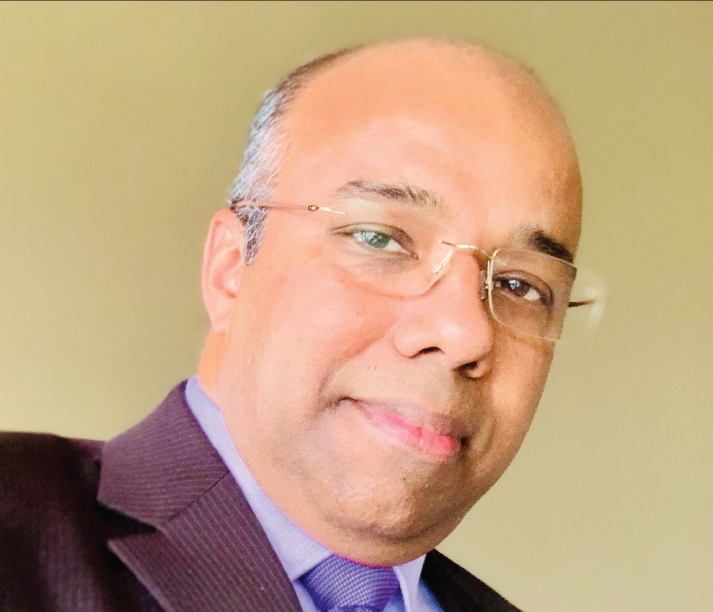
“One day Bangladesh will be a wonder in world’s IT sector”

Farhad Kamal
ICT Specialist
Farhad Kamal is one of the most talented luminaries of Bangladesh in the world. He now lives in Australia. Farhad Kamal has brightened the image of Bangladesh across the globe. He is an ICT specialist by profession. He has been leading the ICT world for more than 30 years. He is a member of the Australian Computer Society (ACS) and the Institute of Electrical and Electronics Engineers (IEEE, USA).
ICT expert Farhad Kamal served as Systems and Networks Administrator of the Queensland Department of Education in Australia. He has been the Public Relations Committee Chair and Social Media Promoter and ICT Director since 2015. Not only Farhad Kamal feels proud of him being well-established in a country of advanced technology like Australia but also all Bangladeshis are proud of this talented luminary. He is the pioneer of social thought and associated with the Rotary Club of Murgon and holds important positions in this organization. He is deeply involved with Volunteering Queensland. He has been an active member of Volunteer at Global Citizen. He believes, if we work together, we can make a united resistance against Covid-19 nationally and globally. Farhad Kamal’s busyness is diverse. He is the State Manager of ‘Gaan Baksho’ in Sydney.
Farhad Kamal has served as coordinator of the ICT department at Catholic Education in Brisbane. He has served there from 2017 to January 31, 2020. Prior to that, he was the ICT Coordinator at the Cherbourg Aboriginal Shire Council. He was the Senior Systems and Network Administrator of the North Burnett Regional Council, Senior Technical Officer of the Queensland Department of Education for merely 7 years for 13 Regional Remote State Schools, Desktop Rollout Engineer of IBM, Senior Technical Engineer of Mackay Computer Service, Freelance Consultant of the Micronutrient Initiative (Canada). He served as Chief Facilitator in the Ministry of Finance of Bangladesh from 2006 to 2008. Prior to this, he was the ICT Consultant of the Canadian High Commission for almost 9 years. He was working as a System Analyst-Web Master at Computer and Management Services Ltd., Dhaka.

Farhad Kamal was the Editor-in-Chief of Internet World, a professional Internet magazine. It is notable that this was the first magazine in the Internet sector of Bangladesh. Before this, Farhad Kamal, an important genius in the internet sector of the country, has served important positions at Sir William Halcrow and Partners Ltd. (UK), Lutheran and World Service (Switzerland). He is also a talented coach. He was employed as a Computer Trainer-Assistant Computer Programmer at the Computer Training Institute of Bangladesh in his early career life.

Farhad Kamal, one of the talents of the internet sector in the world, was also very talented from his student life. He initially attended the Willes Little Flower School, an elite English medium school in Dhaka. He then passed HSC from Bangladesh Airforce Force Shaheen College, Dhaka Cantonment and BSc from Dhaka University. He took a Microsoft Certified Professional (MCP) degree from the Informatics Academy (Singapore) with the intention of becoming an IT expert. He then completed International Diploma in IT in NCC Education from BRAC University. He later earned a Microsoft Certified Systems Engineering (MCSE) degree from the Informatics Academy (Singapore) and a Microsoft Certified Systems Administrators (MCSA) degree. He also achieved System and Network Administrator certification from IBM.

Farhad Kamal is a cultural activist and pioneer in lyrical music videos with Bengali and English subtitles in YouTube (www.youtube.com/user/farhadkamal) for various playlists and Facebook. His YouTube channel has 130K+ subscribers and 31M+ channel views right at this moment. Farhad Kamal is globalizing famous Bengali poet, writer, music composer and painter ‘Rabindranath Tagore’ with the popular Facebook page Òü`‡q wek¦Kwe iex›`ªbv_ VvKziÓ
(https://www.facebook.com/hridoyebishwakabirabindranaththakur/) which has also a huge fan base. Right at this moment 102K+ people like this page and 113K+ people follow this page. Farhad Kamal is also running very popular online 24/7 HD Radio Station called
Òü`‡q wek¦Kwe iex›`ªbv_ VvKzi-Ab GqviÓ for Tagore Songs in different languages which is first of its kind at https://tagoresongslive.airtime.pro/. Farhad Kamal is doing great role play for the multicultural movements in Australia. He is an Adviser for ‘The Australia-Bangladesh Culture in Brisbane (ABC) Inc.’. Farhad Kamal is ‘Branding Bangladesh’ and ‘Bengali culture’ around the globe from Australia since 2008. Besides his IT profession, Farhad Kamal is a dedicated Rotarian, humanitarian, devoted social worker, community organizer, blood donner, publisher, video maker, editor, and computer article writer. Farhad Kamal is proud to be part of all these activities and also receiving ‘Australia Day Award’ twice with the Team Rotary Club of Murgon for the best ‘Community Organisation’ and the best ‘Event of the Year’ for presenting the country music festival respectively in 2017 and 2018. Farhad Kamal has also did numerous IT projects through the Rotary Club of Murgon locally and Internationally. Last one was in Fiji in 2019.

Farhad Kamal believes that “The beauty of life is not how happy you are, but how happy others can be because of you.”

Farhad Kamal is currently an internationally renowned IT specialist. He lives in Queensland, Australia. Farhad Kamal is a self-confident and hard-working individual in his personal life. His beloved father honorable late Mustafa Kamal Panu was a heroic freedom fighter. Despite residing abroad, he hopes, “Someday Bangladesh will be a wonder in world’s IT sector.”


Facebook to freeze political ads before US presidential election

Facebook has announced that it will not take on any new political ads in the seven days prior to the US election on 3 November.
However, the firm will still allow existing ads to continue to be promoted and targeted at different users.
Chief executive Mark Zuckerberg revealed the measure in a Facebook post.
He said that he was “worried” about divisions in the country potentially leading to civil unrest.
He added that Facebook would also label posts from candidates attempting to declare victory before the votes had been counted.
The social network has faced criticism for allowing political ads to be “micro-targeted” on its platform so that they are only seen by small communities rather than debated more widely in the days after they appear.
The Mozilla Foundation has claimed that this makes it easier for politicians and their supporters to parade fiction as fact and avoid being called out on it until it is too late, particularly as Facebook has previously said ads placed by candidates would not be fact-checked.
The new steps could serve as a precedent for how the firm handles elections elsewhere in the future.
Facebook also revealed that it would remove videos of President Trump encouraging voters in North Carolina to vote twice, which is illegal.
Any videos of Mr Trump’s comments without contextualising information would be taken down, the firm said in a statement: “This video violates our policies prohibiting voter fraud and we will remove it unless it is shared to correct the record.”

‘Divided nation’

President Trump has repeatedly claimed the election could be “rigged” due to voter fraud.
“This election is not going to be business as usual,” Mr Zuckerberg wrote.
“With our nation so divided and election results potentially taking days or even weeks to be finalised, there could be an increased risk of civil unrest across the country,” he added.
In an effort to stymie the spread of rumours and deliberate falsehoods on Facebook, the firm has said it will implement a series of measures:
  • no new political ads will be accepted in the week before the election
  • posts claiming people will get Covid-19 if they take part in the vote will be removed
  • information labels will be attached to posts seeking to delegitimise the outcome of the election
  • labels will also be added to posts by candidates that seek to claim victory before the final results are in
Mr Zuckerberg also said that Facebook had also “strengthened” its enforcement policies against movements known to spread conspiracy theories, such as QAnon.
Thousands of Facebook groups associated with these movements had already been removed, he said.
The moves have, however, attracted criticism.
The chief of Media Matters for America – a liberal media monitoring body – described it as being a pointless PR stunt.
“They will still let political ads be rerun and targeted to new groups during [the last] week so long as the ad was run and had one impression before 27 October,” tweeted Angelo Carusone.
“So, you can run a bad ad now, pause it and then reuse it that week.”
An academic who specialises in how tech and politics interact made a related point.
“Campaigns will produce and run thousands of pieces of creative in the days before the cut off so they can run the final week,” said Daniel Kreiss, an associate professor at the University of North Carolina at Chapel Hill.

Analysis

US votersIMAGE COPYRIGHTGETTY IMAGES
By James Clayton, North America technology reporter
What Mark Zuckerberg is really concerned about here is system lag.
He knows the period before – and after – the US elections are likely to be toxic on Facebook.
Paid political adverts usually take time to analyse. Decisions around placing warnings on ads, or even taking them down, can take days.
And close to election day that could cause an enormous headache for Facebook, as the heat ratchets up.
We already knew of his worries about fake news and voter suppression.
But what’s also interesting here is the period he’s flagged between voting and the declared result. As he acknowledges, it could take days for a winner to be announced.
Zuckerberg has identified this potential legitimacy vacuum as a great danger for the US. He believes it could be the setting for civil unrest in America.
That’s why he’s flagging up early that anyone looking to delegitimise the vote will be targeted by Facebook moderators.
Considering Trump is already questioning the legitimacy of the election that could get very, very messy.

Bangladeshi made Walton compressor hits Iraqi market

Walton Group

Bangladeshi brand Walton has started to strengthen its footprint in the Iraqi market by exporting its own branded compressor.

Walton has signed an agreement with Ashrqat Alnarjes General Company, a renowned electronics retailer in Iraq, in this regard.

Roqibul Islam Rakib, head of Asia, Middle East and African regions of Walton’s International Business Unit (IBU), said that two representatives from the Iraqi company visited Walton Compressor Manufacturing Industry at the end of last year.

The representatives were impressed witnessing the compressor production process with the state-of-the art technologies, he said, adding that later, they have showed their interest to be a distributor of Walton branded compressor in the Iraqi market.

Rakib said they have already sent the first consignment of its compressor to Iraq.

“After a successful penetration in Iraqi market, we will ensure our footprint in the neighbouring countries in the Middle East region,” he added.

Meer Muzahedin Islam, chief executive officer of Walton Compressor, said they are manufacturing world class compressor and its related essential components in Bangladesh.

“At the production stage, we have taken ‘zero tolerances’ policy to assure quality,” he said, adding that they have installed an international standard QC (Quality Control) laboratory, equipped with advanced testing tools and machineries in the factory.

The factory also has world’s advanced Hemi Anechoic Acoustic Chamber imported from USA to ensure the lowest noise level of the compressor, he added.

He also said that Walton is manufacturing world’s most ‘silent and durable’ compressors by using German technologies.

Edward Kim, president of Walton IBU, said it is very inspiring that more and more global brands are also continuously knocking them to supply compressors in a huge volume even in this evolving Covid-19 pandemic.

From the Switzerland based international testing lab SGS, several products of Walton have already received many standard certificates including CE, ROHS and EMC, he said.

He said Walton is working to expand its export market to Europe.

Terming compressor industry as a promising sector of Bangladesh, Engineer Golam Murshed, additional managing director of Walton, said the goal of Walton is to be the world’s leading compressor manufacturer.

Walton compressor factory has the capacity of manufacturing four million units of compressors annually, he added.

A team of highly skilled engineers are working relentlessly with the plan of raising the annual production capacity to 10 million units by 2025.

Health and Fitness App Exercises AI for Competitive Advantage

cure.fit health wellness fitness app
In-person workout sessions these days might seem like a thing of the past, while solitary workouts at home replace gym visits as an ongoing result of the pandemic.

The use of artificial intelligence is not yet a common feature in fitness apps, but it is a main component in a popular India-based app now focused on growing users in the U.S. and Canada. Bringing AI to personal workout routines at home could provide gym-starved exercise enthusiasts something new to sweat over.

Fitness apps today have become as prolific on app store warehouses as games and phony ad-blockers. The Cure.fit personal home workout app uses AI to bring more effectiveness to users’ physical training.

Based in Bengaluru, India, in the center of the country’s high-tech industry, Cure.fit has raised US$400 million in funding. The developer’s app has become one of India’s leading fitness programs, claiming 300,000 subscribers. That popularity is spreading globally with more than 12,000 U.S. downloads since June.

Cure.fit may well be a few steps ahead of other fitness apps trying to bring new twists to humdrum exercise routines at home. The company leans heavily on big data and AI to drive user experience and growth.

The app lets users have a group workout session without leaving their homes. Many fitness apps have varying approaches to coaching users through their training sessions. So it may be marketing hyperbole to judge the excellence of one fitness app over others.

Artificial intelligence is only part of what drives Cure.fit, according to Shamik Sharma, head of international business at Cure.fit. While a number of fitness apps are available worldwide, what makes Cure.fit unique is that it focuses on everything having to do with the mind and body.

“The app offers holistic health offerings across physical fitness and workouts, healthy food, and mental well-being,” he told TechNewsWorld. In regions outside of India, app users do not have access to those ancillary parts of what Cure.fit offers users in India, at least not yet.


Ubuntu Budgie Whistles Up a Better Remix

If you have yet to try the developing Budgie desktop, the latest release of Ubuntu Budgie is a perfect opportunity to experience a classy and user-friendly computing platform.

Budgie is one of the first home-grown Linux distros to release its latest version based on Ubuntu 18.04. The independent developer announced Ubuntu Budgie 18.04 last week, coinciding with Canonical’s release of Ubuntu 18.04 LTS.

Canonical also offers a Budgie desktop option in Ubuntu Linux. However, the two Ubuntu-branded distros are not the same thing.

Ubuntu Budgie is maintained by a UK-based developer community. Formerly Budgie Remix, the Ubuntu Budgie distro is a desktop Linux distribution featuring the simple Budgie desktop. Ubuntu Budgie is not from Canonical.

The Solus community originally developed Budgie from scratch and tightly integrated the desktop user interface with the GNOME stack. Solus also offers the GNOME and MATE desktops. Ubuntu Budgie only comes in one flavor.

Ubuntu Budgie 18.04 is the community’s first Long Term Support release good for three years instead of the nine-month release cycle. This new release comes with numerous new features, fixes and optimizations.

The improvements include more customization options via Budgie Welcome, more available Budgie applets, dynamic workspaces, hot-corners and Window shuffler, plus a new GTK+ theme called “Pocillo.” You also get new applets as standard in the panel or available to be added via Budgie Settings.

Ubuntu Budgie Welcome Screen
Ubuntu Budgie’s expanded Welcome Screen makes it very easy for new users to find what they need to get up to speed quickly.
Showing Progress
I have used the Budgie desktop with several Linux distros on and off over the last few years for a change of pace on a few of my secondary work machines. At first, I found Budgie to be a bit limited in what it offered.

However, with each new major upgrade, Budgie became more useful and flexible. It has now progressed to the point that it does not sacrifice performance in favor of simple design.

Ubuntu Budgie desktop settings
Budgie desktop settings are easy to apply and provide an expanded set of options.
I am particularly pleased with the latest release of Ubuntu Budgie. This distro’s implementation of the Budgie desktop has shown substantial growth in features and usability.

The developers are dedicated to mastering the user experience with just this desktop environment. That attention to detail has paid off.

Distro at a Glance
Ubuntu Budgie comes with a choice of three stable releases. Besides the latest 18.04 LTS edition, you can install version 17.10.1 and the 16.04.4 edition.

The latest edition (18.04) has Long Term Support until Apr 2021. The previous edition, 17.10.1, is a standard stable release and follows the Ubuntu support cadence for three more months. The oldest available edition, 16.04.4, will receive community support only until the end of this July.

Ubuntu Budgie is available in 64-bit and 32-bit versions. Given the short support period remaining on the other two choices, go with the latest edition to get the best experience with the Budgie desktop.

The 64-bit latest edition works well with computers running 4 GB or more of RAM on both Intel and AMD processors. It also works on modern Intel-based Apple Macs. If your hardware has UEFI support, be sure to boot in CSM mode. In other words, turn off Secure Boot in the BIOS settings.

Minimum system requirements invite a wide range of legacy computers to the Linux party, including the following:

Pentium Dual Core 1.6 Ghz
2 GB of RAM
16 GB disk storage
For better performance, your hardware should match these recommendations:

Pentium i3
4 GB of RAM
80 GB disk storage
What’s Inside
Out of the box, Ubuntu Budgie provides a complete set of applications for your daily basic computing tasks. The software center makes adding or removing applications quick and simple.

If you are inclined to be a software purist, you can spare yourself the manual labor by choosing the minimal installation option. It will give you a stripped-down install with just the Chromium Web browser and a few key utilities to get started.

You can elect to install third-party software for graphics and WiFi hardware components, along with MP3 and other media. You also can choose to download updates while installing the operating system.

If you bypass the minimal installation, you will get the latest version of the LibreOffice suite. Thanks to some tightly knit cooperation with Canonical, the installation process also bundles some useful Ubuntu-based applications:

spice-vdagent to improve performance in VMs such as GNOME Boxes and QEMU GNOME 3.28 applications;
Nautilus 3.26 to ensure desktop icons support is maintained throughout the LTS period;
Linux Kernel 4.15 to give you many fixes throughout the Ubuntu stack.
Advertisement

Working With Budgie
Budgie is designed for the computing experiences of modern users. Its display presents users with a simple and elegant design. It has a plain and clean style and is easy to use.

The Budgie desktop is not a fork of any other desktop project. Its designers planned for an easy integration into other distros, and it is an open source project in its own right.

Many of the limitations in earlier iterations of the Budgie desktop have been removed. Of course, those limitations were a tradeoff to simplify the user experience.

Budgie has an uncluttered design with little software bloat. To keep things simple and elegant, you still can not fully alter Budgie’s look and feel.

For instance, the desktop view remains uncluttered partly because you can not stick application icons anywhere. Another annoying feature of sorts is the inability to fully resize application windows.

One of my standard screenshot settings for distro reviews is to arrange a collection of interesting system tools or other running applications on the desktop. I still can not do that for the Budgie desktop. It is nearly impossible to squeeze in two reduced windows, especially if I combine the view with opened menu panels.

I still miss the ability to use favorite keyboard shortcuts, but I am much happier with the improved features for navigating among virtual workspaces.

So, there is a balance of good and not-so-good. Notice that I have not described these remaining limitations as bad things. Budgie just requires adjusting my workflow slightly.

Lay of the Land
Parts of the screen layout resemble GNOME 3. A quick launch dock, called a “Plank,” hangs on the left vertical edge of the screen. You easily can pin application launchers there or remove them.

A panel bar sits across the top of the screen. It has a few nifty icons to drop down handy things like QuickNote, Night Light, and some standard system icons typical for most Linux distros. You easily can add applets to the panel.

Ubuntu Budgie desktop settings
Ubuntu Budgie’s screen design includes a simple applications menu and functional top panel bar.
Ubuntu Budgie’s main menu drops down from the top left. The menu is just as simple and uncluttered as the rest of the user interface.

Right-clicking on the desktop opens a limited menu with the ability to create a new folder, change background, open terminal window and organize icons.

The application menu has no cascading views. It is a two-column design.

The left column lists the application categories. The right column lists the individual apps in that category. A search window at the top of the two columns makes it easy to quickly locate any installed program.

Ravin’ Design
At the heart of the Budgie desktop is Raven — an applet, notification and customization center. Combined with the system settings panel, it is the key to controlling the user experience through easy customizations.

To access Raven, use the super key + N key combination. You also can click on the Raven icon on the top panel bar. It slides out from the right screen edge much like the GNOME 3 virtual desktop display.

Within the Raven applet, click the Applets tab to access the controls for calendar, speaker and microphone. Click the Notifications tab to see unread system notifications.

Click the Setting gear wheel to open the Budgie settings panel. There you find two tabs: General and Panel.

Ubuntu Budgie strictly enforces the simplicity rule. Even the settings panel and the desktop right-click menu are neat and clean.

Bottom Line
The Budgie desktop lacks the glitz and glitter found in more seasoned desktop environments. Animation is nonexistent.

However, this latest release makes good on Ubuntu Budgie’s promise to provide simplicity and elegance along with functionality. It goes further down the development pathway to improve on the simplicity to make Budgie a solid desktop choice.

Want to Suggest a Review?
Is there a Linux software application or distro you’d like to suggest for review? Something you love or would like to get to know?

Please email your ideas to me, and I’ll consider them for a future Linux Picks and Pans column.

And use the Reader Comments feature below to provide your input!

Microsoft Gives Productivity Tools More AI Chops

Microsoft on Wednesday announced new artificial intelligence features and functionality for several of its flagship products and services, including Office 365, Cortana and Bing, at an event in San Francisco. Harry Shum, EVP of Microsoft Artificial Intelligence and Research, demonstrated some of the new capabilities

Building on the progress the company has made in integrating AI over the past year, the new enhancements are designed to help users perform increasingly complex and complicated tasks.

“AI has come a long way in the ability to find information, but making sense of that information is the real challenge,” said Kristina Behr, a partner design and planning program manager with Microsoft’s Artificial Intelligence and Research group.

One of the advances, machine reading comprehension, will improve an AI-based system’s understanding of context — for example, recognizing that one’s cousin is a family member.

Pearson Education – Click For More

Search Benefits
Bing users will get more personalized answers, Microsoft said, such as restaurant recommendations based on travel destinations, or a greater variety of answers to offer different perspectives on a topic.

AI guidance might help users figure out the exact questions they want to ask if their search queries are too vague to deliver meaningful results.

Bing will utilize visual search as a way to help people seek information about items or objects in photos. This functionality will comprise the use of object recognition along with machine reading comprehension.

An Office AI
Microsoft announced improvements in AI integration with its Office 365 tools as well. The spreadsheet program Excel, for example, will employ machine learning as a way to analyze data and predict trends via pivot tables and charts. The new AI tools also will be able to extract insights from smaller sets of data.

Importantly, use of the new AI functionality won’t require more advanced training in Excel for users to determine which sets of data should be used to gain deeper insights.

More Conscious Cortana
Microsoft’s virtual assistant Cortana will get an upgrade as well, allowing it to make use of machine reading comprehension to summarize search results. Cortana also will be able to sort through a user’s emails to identify the most important ones and even read them aloud during a commute, for example. Use of that functionality will extend to emails from multiple accounts, including on competing services such as Gmail.

Cortana also has been enhanced with “skills chaining,” allowing it to suggest additions to one’s calendar after tickets have been booked, for example.

Astute AI
These AI advances likely will be subtle and may go unnoticed by many users.

“AI will creep more and more into our lives,” said Roger Entner, principal analyst at Recon Analytics.

“Ideally it will help to make tools like Bing, Cortana and Office 365 more userful,” he told TechNewsWorld.

“This is the good AI, not the Terminator AI,” noted Jim McGregor, principal analyst at Tirias Research.

“In most cases, AI functions will be transparent to users just like they are in search engines today,” he told TechNewsWorld.

The AI functionality simply makes the tools more efficient and useful.

“Think of this as reducing some of the simple tasks — not the human part of the equation,” McGregor suggested, “and think about intelligent digital assistants and word predictors or spell checkers that are more reliable than the ones we have today. This will be the most common form of AI — embedded solutions that make the tools we use better, from search engines to scientific research.”

How Far to Take It
Although the most extreme AI danger may lie in the rise of machines that overpower human controls, there are more subtle menaces to consider when it comes to the place it will take in our lives.

“It is upon us to draw a line,” said Entner.

“Examples like Google and its all-encompassing ‘data kraken’ make it clear how blurry the line is between really useful and really creepy — like when your Android phone constantly asks you if you are actually shopping at the store you are at,” he pointed out. “Big brother [could be] watching all the time.”

Oracle Releases Second Half of Autonomous DB

A lot of people might have thought Oracle’s announcement of the autonomous database at last year’s OpenWorld and its subsequent release earlier this year were the whole story, but there’s a lot more, and Tuesday’s webcast featuring Larry Ellison was proof.

Ellison must find his CTO role — since he handed the CEO reins to Safra Catz and Mark Hurd — to be stimulating and liberating at the same time. Being CTO gives Ellison the ability to be highly creative in a part of the industry that plays to his strengths. It’s a highly technical field where few septuagenarians make a mark, and it gives him access to lots of smart people to trade ideas.

His evident joy was on display Tuesday as he introduced the second part of the autonomous database. The announcement this spring focused on autonomous data warehousing, or ADW. Tuesday was all about autonomous transaction processing, or ATP.

Oracle vs. Amazon
Some of the messaging was the same: The database provisions, maintains and repairs itself, for example. “There’s nothing to do,” Ellison said more than once, suggesting that database administrators’ jobs surely will be redefined by the announcement.

Nothing to do extends to nothing to break, and an embedded expert system very well might do a better job than the average DBA.

Toward the end of his talk, Ellison showed a graphic that provided all the proof you might need to accept the efficacy of the automation. It involved the NetSuite database. After 20 years, it has been well refined — yet even for it, the expert system found ways to improve performance.

The autonomous database is an important economic milestone of sorts too. Database technology solidified in the 1970s and there has been little progress in automating the tasks of keeping a database operating — until now.

Automation, which this product offers in spades, is a sign that we’re late in the life of a disruptive innovation (i.e., the relational database). It’s a sign of commoditization, and an indicator that we’re dealing with the biggest quantities — and market share is essential for turning profits.

That’s why I think Ellison took such delight in making invidious comparisons between Oracle’s database and Amazon’s.

A Few Caveats
Amazon has a market share lead, and Oracle badly wants to reverse the situation. That’s why there’s so much emphasis on price and performance.

For example, Oracle has introduced a guarantee that it can lower a customer’s Amazon bill by half, and Ellison has boasted that his database competitors all use Oracle for their own data.

There’s no doubt this market has been commoditizing, and that only the biggest and most efficient producers will survive. Naturally, Oracle and Ellison expect to be in the winner’s circle.

It takes more than software to deliver the 99.995 percent up time promised. All of the autonomous database functionality requires Exadata hardware, and because it is fault tolerant, multiple servers are at the ready.

In the cloud configuration supported by Oracle data centers, customers experience serverless conditions — meaning that when the database is not in use, it uses no server time and incurs no server costs. Oracle also has made provisions for big customers that can afford all of the hardware and who wish to keep all data processing in-house.

That said, the autonomous database represents a new era in IT, in which the default position is cloud. The assumption is that business will be unimpeded, or at least less impeded, by IT systems that are slow or hard to change.

With the full release of the autonomous database and its associated security capabilities announced earlier this year, we’ve reached the end of the line for common legacy applications. They will be around for years, but it’s hard to see how very many new ones will be made or sold

Farsight Security COO Alexa Raad: ‘Be Your Own Champion’

Alexa Raad is chief operating officer of Farsight Security, based in San Mateo, California. Farsight Security is a provider of real-time actionable Internet threat intelligence solutions.

In this exclusive interview, Raad discusses methods of curbing cybercrime by tracking bad actors through the trails they leave in the domain name system. She also offers some encouraging advice to women and girls interested in breaking into the cybersecurity field.

Farsight Security COO Alexa Raad

Alexa Raad

Chief Operating Officer

Farsight Security

TechNewsWorld: What is Farsight Security’s mission?

Alexa Raad: We believe that everyone is entitled to a safer Internet, and so everything we do starts out with that mission in mind. What we do is provide Internet defenders with very valuable data that they can use to get some context around nefarious acts.

As an example, if you think about Internet threats like phishing and botnets and malware — all of those start with a DNS — a domain name system. And so every kind of nefarious act leaves footprints and fingerprints in the DNS. That’s something that cannot be faked. We provide information that is contextual.

Aspose Ad

To give an example, a lot of the new domain names that are registered are typically registered with bad intent, meaning criminals are going to use them to commit some sort of act, like phishing attacks, etc. When a domain name is registered, it’s fine, but when traffic starts going to those sites, it becomes much more dangerous.

When people start actually going to a phishing site, it raises the threat level. We have a global sensor network that picks up these resolutions. We collect this data, but without any personally-identifiable information, which is important.

That information allows people to see what’s actually got some traction, and we also add additional information for guilt by association. If a phishing site is actually hosted where there are lots of other bad actors or bad sites, that provides you with some context. You start to follow that and get a better picture of that attack than you would otherwise.

We provide real-time and historical information, and both are contextual. The real-time data is important, because you have to fight these battles in near real time. The historical information is important because you want to know if this was the first time we ever saw this URL or domain name. A lot of these patterns repeat themselves. It is unlikely that a site was bad six months ago and all of a sudden it’s reformed. Having that contextual information is important.

TNW: Why do you have a passion for cybersecurity? Why do you think it’s an important and vital field?

Raad: I believe in the mission of cybersecurity. I want to leave our kids with a safer Internet. The Internet is such a utility — we all rely on it, and we have to have some modicum of expectation that the Internet is safe.

The DNS is a fabric that’s equalizing. Regardless of where you are on the Internet, you have a voice. We’re learning that if Internet is not taken care of, there will be unintended consequences.

TNW: What are some of the key cybersecurity issues today? What are some prevalent or common problems that we face?

Raad: There’s an increasing number of attacks with the Internet of things. The number of Internet-enabled devices is increasing, and all of these connected devices provide vectors for cybersecurity attacks. The race is on for cheaper devices, but the race isn’t necessarily on to create more secure devices.

TNW: What advice would you give to girls and women wanting to get into the cybersecurity field?

Raad: It’s the ideal field for women. To be really good in cybersecurity, you have to have an inquisitive mind, be a problem-solver, and see things holistically.

For a problem that’s complex, you need to think holistically, you can’t compartmentalize. You have to think, how would a criminal look at your DNS architecture? Women tend to think holistically, and if you do, you will excel in this field.

The other piece of advice I would give is that you have got to be your own champion. Don’t wait for anyone to propose something to you or to give you the promotion that you deserve. You have to speak up. You have to be your own advocate, and you have to lay out the business case.

If you want to be promoted, for instance, you have to say, this is what I’ve done, this is what I’ve accomplished, this is what I can do more of, and this is why it’s in your own best interest to promote me. There is an imbalance in the number of women in power, and it’s also at the executive level. Very few women are CEOs or in the c-suite or on the board, and there is a lot that women can offer and do.

Whether it’s because companies recognize the need to hire more women or they have a policy to do so, the opportunities for women are there. The security industry is growing. There aren’t enough people to fill the jobs available, and a lot of them are high-paying, with good benefits. You just need to be your own champion.

TNW: What new cyberthreats are emerging, and how can businesses prepare themselves to face them?

Raad: You see a lot of ransomware. Just a few weeks ago I was at my dentist, and he told me that he had just been the victim of a ransomware attack, and he ended up paying it. You wouldn’t have thought he would be the victim of an attack like that, but someone in his organization had clicked on a link, and all of his patient records were frozen until he paid the ransom.

You will see more of this because it pays well, and it targets people who aren’t well-versed in security hygiene. We’ll see more and more of the security issues and attacks that come because of insecure devices like wearables and Internet-connected devices.

There isn’t an incentive for manufacturers to create more security. The economic incentive is more toward creating devices that are cheaper and more affordable than more security, but it really has to be both. It requires both better engineering and better policy

Tinder founders sue parent companies Match and IAC for at least $2B

A group of Tinder founders and executives has filed a lawsuit against parent company Match Group and its controlling shareholder IAC.

The plaintiffs in the suit include Tinder co-founders Sean Rad, Justin Mateen and Jonathan Badeen — Badeen still works at Tinder, as do plaintiffs James Kim (the company’s vice president of finance) and Rosette Pambakian (its vice president of marketing and communications).

We’ve reached out to IAC for comment, as well as Pambakian, who’s served as our main contact at Tinder. We’ll update the post if we hear back.

The suit alleges that IAC and Match Group manipulated financial data in order to create “a fake lowball valuation” (to quote the plaintiffs’ press release), then stripped Rad, Mateen, Badeen and others of their stock options. It points to the removal of Rad as CEO, as well as other management changes, as moves designed “to allow Defendants to control the valuation of Tinder and deprive Tinder optionholders of their right to participate in the company’s future success.”

The lawsuit also alleges that Greg Blatt, the Match CEO who became CEO of Tinder, groped and sexually harassed Pambakian at the company’s 2016 holiday party, supposedly leading the company to “whitewash” his actions long enough for him to complete the valuation of Tinder and its merger with Match Group, and then to announce his departure.

In response, the plaintiffs are asking for “compensatory damages in an amount to be determined at trial, but not less than $2,000,000,000.”

“We were always concerned about IAC’s reputation for ignoring their contractual commitments and acting like the rules don’t apply to them,” Rad said in the release. “But we never imagined the lengths they would go to cheat all the people who built Tinder. The Tinder team — especially the plaintiffs who are currently senior leaders at the company — have shown tremendous strength in exposing IAC/Match’s systematic violation of employees’ rights.”

Update: We’ve just received the following joint statement from IAC and Match Group.

The allegations in the complaint are meritless, and IAC and Match Group intend to vigorously defend against them.

Since Tinder’s inception, Match Group has paid out in excess of a billion dollars in equity compensation to Tinder’s founders and employees. With respect to the matters alleged in the complaint, the facts are simple: Match Group and the plaintiffs went through a rigorous, contractually – defined valuation process involving two independent global investment banks, and Mr. Rad and his merry band of plaintiffs did not like the outcome. Mr. Rad (who was dismissed from the Company a year ago) and Mr. Mateen (who has not been with the Company in years) may not like the fact that Tinder has experienced enormous success following their respective departures, but sour grapes alone do not a lawsuit make. Mr. Rad has a rich history of outlandish public statements, and this lawsuit contains just another series of them. We look forward to defending our position in court.

Hello world!

ITF President David Haggerty said he is optimistic for approval, which he said would be good for the sport’s growth. “The money that we will make will go to the nations to put into their development programs for juniors and for the future of tennis,” Haggerty said Tuesday during a conference call.

ITF President David Haggerty said he is optimistic for approval, which he said would be good for the sport’s growth. “The money that we will make will go to the nations to put into their development programs for juniors and for the future of tennis,” Haggerty said Tuesday during a conference call.

ITF President David Haggerty said he is optimistic for approval, which he said would be good for the sport’s growth. “The money that we will make will go to the nations to put into their development programs for juniors and for the future of tennis,” Haggerty said Tuesday during a conference call.

ITF President David Haggerty said he is optimistic for approval, which he said would be good for the sport’s growth. “The money that we will make will go to the nations to put into their development programs for juniors and for the future of tennis,” Haggerty said Tuesday during a conference call.

ITF President David Haggerty said he is optimistic for approval, which he said would be good for the sport’s growth. “The money that we will make will go to the nations to put into their development programs for juniors and for the future of tennis,” Haggerty said Tuesday during a conference call.

ITF President David Haggerty said he is optimistic for approval, which he said would be good for the sport’s growth. “The money that we will make will go to the nations to put into their development programs for juniors and for the future of tennis,” Haggerty said Tuesday during a conference call.