ADB: Strong financial sector can be 4th driver of Bangladesh economy

‘If you can have a strong financial sector, it can actually become another driver to the Bangladesh economy’

Bangladesh needs to be serious to get the fourth pillar for its growing economy giving much importance to financial sector development to successfully make the country one of the top 20 economies of the world, said Asian Development Bank (ADB).

“Financial sector development can be the fourth pillar of Bangladesh’s economy,” said ADB Country Director Manmohan Parkash in an interview, noting that “Bangladesh’s economy is largely driven by domestic consumption, remittance and trade”.

He said preparing a 10-year roadmap for financial sector development based on three pillars of financial integration, fiscal transparency and financial resilience could help further catalyze Bangladesh’s economy, and financial markets.

“It’ll also protect the economy against external shocks,” ADB country director said adding that “if there is a better financial integration, any crisis can easily be dealt with because of the same standards and similar rules in place”.

Citing the examples of Singapore and Hong Kong, he said their GDP was more than that of Bangladesh despite being very small countries because they had a very strong financial sector. 

“If you can have a strong financial sector, it can actually become another driver to the Bangladesh economy,” Prakash added.

He, however, said developing a strong financial sector was not something that Bangladesh could achieve in six months or one year, and there were lots of international experiences that could be brought in.

“Probably, you need a 10-year roadmap that can help you take full advantage of the financial sector,” he said adding that “the openness of information brings confidence among all.”

Parkash, who joined the ADB in 2002, said: “Bangladesh is seen as a model for growth today even in difficult global economic outlook and Bangladesh will stand out by growing at record 8% in 2019 and 2020.”

“The growth is expected to moderate across most of developing Asia at 5.7% in 2019 and 5.6% in 2020.

However, according to the ADB, South Asia will buck this trend growing at 6.8% in 2019 and 6.9% in 2020,” he added.

“This is actually very good news (Bangladesh growth) – which also means that the continued political calm, sound macroeconomic policies of the government, pragmatic steps that have been taken and right development priorities are contributing to this whole thing,” he ADB country director also said.

Taking advantage of 3 Things 

Parkash, who oversees the implementation of the ADB Country Partnership Strategy for Bangladesh (2016-2020), said the country’s GDP crossed $300 billion this year and the ADB wished it reaches $1 trillion by 2030.

To achieve this, Parkash said, Bangladesh would have to take full advantage of its demographic dividend, exploit its locational advantage by enhancing its connectivity with east, west and north, and promote trade and investment by developing a resilient and strong financial sector.

“A strong financial sector helps regional and international market integrate, attract long-term investments, public-private partnerships (PPPs), and deepen and broaden economic integrations,” he said.

Domestically, Parkash said, it helps improve financial sector stability, increase the efficiency and liquidity of markets, and strengthen the regulatory environment.

Responding to a question, the ADB Country Director said: “Bangladesh has done very well as far as trade integration is concerned but one thing Bangladesh needs to do more is financial integration.”

Talking about young population, Parkash laid emphasis on making them a skilled labour force and making them employable so that they can contribute to the economy.

Remittance 

The ADB country director said: “Bangladesh’s remittance inflow is currently on the low-end as its skill base is low.”

He said almost 12 million Bangladeshis are living abroad and they were remitting US $15 billion annually. 

“With the same number of people by 2030, I hope, you can get almost US $100 billion worth of remittances,” he said.

Stock market

Parkash said Bangladesh’s capital market was developing after the stocks market debacle in late 2010 and early 2011.

“Fortunately, after that, some good measures and actions have been taken,” he said recalling the time the government had requested the ADB to provide assistance.

Parkash said: “Today not many people are coming from outside and investing because they do not know whether and how they will get the money back and whether the companies are adopting good corporate governance.

“With better financial integration, there will be lower amount of remittances coming through informal channels. Also, the cost of doing business will go down. The cost will be largely dependent on how the financial structuring has been done.”

Financial literacy 

The ADB Country Director said financial literacy promoted sustainable market development.

He said more informed and rational individual decisions develop a more competitive and fair market. 

He said: “It incentivises financial industries to be more innovative to develop new products and services to meet clients’ new demand.”

Parkash said: “Financial literacy helps create new wealth and benefits individual citizens who must manage longevity risk with better wealth management.”

He said to gain a full advantage of new regulatory regimes, financial education was necessary to encourage people to change their behaviours and become more serious about their wealth management using these new financial instruments.

Parkash said financial education was critical for strong and effective investor protection. “Indeed, even financially literate individuals sometimes make mistakes.”

With financial sophistication, he said: :The number of people deceived by fraudulent investment operations reminds us that financial education does not fully provide protection against fraud, and investor protection must be pursued under a better implementation framework by regulators.”

He said financial literacy wouol teach people how to create new wealth and how to make the best use of opportunities available. “That’s why financial literacy goes hand in hand with investors’ protection.”


Profit soars for Microsoft fueled by cloud, business services

Microsoft on Thursday delivered stronger-than-expected earnings in the recently ended quarter, citing growth in partnerships with companies on technology and cloud computing services.

The US technology titan, shifting in recent years to business services from consumer tech, reported its net income rose 49 percent to $13.2 billion on revenue that was up 12 percent to $33.7 billion.

Microsoft’s profit in the fiscal fourth quarter that ended June 30 was helped by at $2.6 billion tax benefit, according to the company.

The results showed the “strongest commercial quarter ever,” for Microsoft, said chief financial officer Amy Hood.

Chief executive Satya Nadella said the results closed out a record fiscal year for the tech giant, which has the largest market value of any company at more than $1 trillion.

“It was a record fiscal year for Microsoft, a result of our deep partnerships with leading companies in every industry,” said Nadella.

“Every day we work alongside our customers to help them build their own digital capability — innovating with them, creating new businesses with them, and earning their trust. This commitment to our customers’ success is resulting in larger, multi-year commercial cloud agreements and growing momentum across every layer of our technology stack.”

Net income for the fiscal year more than doubled to $39.2 billion on revenue that was up 14 percent to $125.8 billion, according to the earnings report.

Microsoft shares rose 1.3 percent to $138.15 in after-market trading that followed release of the earnings figures.

Apple iPhones get bigger and pricier, watch turns to health

Apple Inc introduced its largest-ever iPhone and a watch that detects heart problems yesterday in an attempt to get customers to upgrade to more expensive devices in the face of stagnant global demand for smartphones.

The relatively small changes to its lineup, following last year’s overhauled iPhone X, were widely expected by investors and the company’s shares ended down 1.2 percent at $221.07.

The strategy has been successful, helping Apple’s stock to rise more than 30 percent this year and making it the first publicly traded US company to hit a market value of more than $1 trillion.

Apple’s new iPhone XS, pronounced “ten S,” has a 5.8-inch (14.7-cm) screen, and will be sold at a starting price of $999. The XS Max, the largest iPhone to date and one of the biggest on the market, has a 6.5-inch (16.5-cm) screen, and will start selling at $1,099.

“They have finally added a larger-screen phone so that they can directly compete with the Galaxy Note9 products,” Gartner analyst Annette Zimmermann said at the event at Apple’s Silicon Valley headquarters, referring to rival Samsung Electronics which has led the trend toward big-screen phones.

“The larger screen will be very important in China to turn around the trend there, because they have lost some share in the last few years, partly because of screen size,” she added.

Apple also introduced a lower-cost 6.1-inch (15.5 cm) iPhone XR made of aluminum, at a starting price at $749.

The iPhone XS Max’s display size is 26 percent larger than the previous largest iPhone display, marking it the largest increase in screen size since 2014, wrote analyst Gene Munster of Loup Ventures in a note.

This year’s three top phones are all more expensive than last year’s models.

With two of them starting at $999 or higher in the United States, Apple appears to be taking advantage of a strong US economy, low unemployment, and rising household wealth. The median US household income rose for a third straight year in 2017 to the highest on record since 1967 by one measure, government data showed on Wednesday.

MEDICAL DEVICE MARKET

Looking for ways to lessen reliance on phones, which represent more than 60 percent its revenue, Apple opened its event by announcing the new Apple Watch Series 4 with edge-to-edge displays, like its latest phones, and they are more than 30 percent bigger than displays on current models.

It is positioning the new watch as a more comprehensive health device, able to take an electrocardiogram to detect an irregular heartbeat and start an emergency call automatically if it detects a user falling down, potentially appealing to older customers.

The US Food and Drug Administration said it worked with Apple to develop apps for the Apple Watch and has been taking steps to ease the regulatory pathway for companies seeking to create digital healthcare products.

As many as 6.1 million Americans have atrial fibrillation, a heart disease involving irregular heart rhythm for which the Watch could offer an early warning. That number is expected to double by 2050 as the population gets older, according to the American Heart Association.

“This does have a lot of potential for patients,” said Dr Michael Valentine, president of the American College of Cardiology and a cardiologist at Central Health in Lynchburg, Virginia. “Clinicians face patients every day with palpitations, rapid heart rates, and other symptoms,” and the doctors want a more portable monitoring and recording system.

BMO Capital Markets analyst Joanne Wuensch added that physicians would be unlikely to make medical treatment based on data from the watch, though it could encourage patients to see cardiologists.

Healthcare technology analyst Ross Muken at Evercore said many companies were developing monitoring devices. “This update really establishes the company’s increasing efforts to push the watch as a serious medical device,” he said of Apple.

Shares of fitness device rival Fitbit Inc fell 6.9 percent after the Series 4 announcement on Wednesday.

Apple’s event was held at the Steve Jobs Theater in its new circular headquarters in Cupertino, California, named after the company’s co-founder who wowed the world with the first iPhone in 2007.

Executives made no mention of a wireless charging mat, or content deals for Apple TV, as some industry analysts had expected.

“We all knew this was going to be a transitional but not transformational phone update,” said Trip Miller, managing partner at hedge fund Gullane Capital, which owns Apple shares.

WB pulls funding for new state capital in India after Delhi drops support

The World Bank said on Friday it had withdrawn $300 million of funding for a new capital in Andhra Pradesh after the central government dropped support for the project.

The Beijing-backed Asian Infrastructure Investment Bank (AIIB), that was due to finance $200 million of the project, then said it was reviewing its involvement.

The construction of the city, known as Amaravati, is the brainchild of the state’s former chief minister, N Chandrababu Naidu, who lost power in elections in May.

The two banks were due to provide the lion’s share of the $715 million cost of critical funding for transport, sanitation and water supply.

The World Bank’s withdrawal was reported by Indian media on Thursday but the federal government’s involvement in that decision has not been previously disclosed, nor had the AIIB’s plans for a review.

Prime minister Narendra Modi laid the foundation stone for the project in 2015, but he and Naidu fell out after Naidu’s party broke from Modi’s ruling coalition last year.

The government of India has withdrawn its request to the World Bank for financing the proposed Amaravati Sustainable Infrastructure and Institutional Development Project, Sudip Mozumder, a New Delhi-based spokesman for the bank, told Reuters.

The World Bank’s Board of Executive Directors has been informed that the proposed project is no longer under preparation following the government’s decision.

AIIB spokeswoman Laurel Ostfield told Reuters in Beijing that it was aware the World Bank has dropped the project from its investment pipeline.

Our investment committee will be discussing our involvement in the project early next week, he said.

Dr P Lakshmi Narasimham, the commissioner of the Andhra Pradesh Capital Region Development Authority, the state body overseeing construction of the city, declined to comment on the implications of the funding withdrawal.

The Amaravati project, built on greenfield land on the banks of the sacred Krishna River, has been beset by accusations from activist groups of corruption and environmental damage. The state government has denied the accusations.

Andhra Pradesh was split in two in 2014, with the new state of Telangana containing the historic capital, Hyderabad, though both states agreed to share it for 10 years.

For a change, good sense has prevailed upon the bank to withdraw from the disastrous programme, Sreedhar R, the director of the Environics Trust, one of the activist groups that has been critical of the project, said in a statement.

This also vindicates our stance that (AIIB) which is a co-financier in the project, can no longer hide behind the World Bank which it has been doing.

MAX GROUP GETS BAB ACCREDITATION

Quality Testing Laboratory of Max Infrastructure Limited achieved accreditation certificate from Bangladesh Accreditation Board (BAB) as a Testing Laboratory.

Industries Minister Nurul Majid Mahmud Humayun, MP, handed over the certificate to Max Group Chairman Eng Ghulam Mohammed Alomgir at an accreditation certificate giving ceremony.

The ceremony was organized to mark the World Accreditation Day at the minister’s secretariat office recently.

With this certification, Max Laboratory achieved international recognition which will help the organization producing quality construction work for Bangladesh. 

Honda to shut UK car plant in 2022 with the loss of 3,500 jobs

Japanese car maker Honda is set to announce the closing of its only British car plant in 2022 with the loss of 3,500 jobs, a lawmaker told Reuters, in the latest blow to the UK car industry as Brexit approaches.

A closure of Honda’s Swindon factory in southern England would be its second plant shuttering in 2022. The automaker said more than a year ago it will close one of its Japan plants in 2022, in an effort to consolidate production as it focuses on new vehicle technologies.

Honda built over 160,000 vehicles at Swindon, where it makes the hatchback version of its popular Civic model, accounting for a little more than 10 percent of Britain’s total output of 1.52 million cars.

But it has struggled in Europe in recent years, and the industry faces a number of challenges including declining diesel vehicle demand and tougher regulations alongside the uncertainty over Britain’s departure from the European Union, due next month.

Justin Tomlinson, a Conservative lawmaker for Swindon who voted for Brexit in 2016, said he had met with the business minister and representatives from Honda who had confirmed the plans.

“They were due to make a statement tomorrow morning, it’s obviously broken early,” Tomlinson, lawmaker for North Swindon, told Reuters.

“This is not Brexit-related. It is a reflection of the global market. They are seeking to consolidate production in Japan.”

Honda said it would not be providing any comment on the “speculation”.

“We take our responsibilities to our associates very seriously and will always communicate any significant news with them first,” the firm said.

Honda announced in October 2017 it would stop making vehicles at its Sayama plant in Japan by 2022 as it grapples with a shrinking domestic market.

Like many of its global rivals, Honda is trying to streamline its operations as it invests heavily to develop electric vehicles and self-driving cars, transforming itself from simply a manufacturer of cars into a mobility company.

Japan has repeatedly warned it could pull investments in Britain, which it had seen as a gateway into Europe, if London does not secure a Brexit deal favourable for trade.

The recently agreed EU-Japan trade agreement means tariffs on cars from Japan to the continent will be eliminated, while Britain is struggling to make progress on talks over post-Brexit trade relations with Tokyo.

NISSAN’S MOVE

Honda’s announcement would come just over two weeks after bigger Japanese car maker Nissan cancelled plans to build its X-Trail sport utility vehicle in Britain.

In January, Britain’s biggest automaker Jaguar Land Rover said it would cut 10 percent of its workforce, mainly at home, due to sluggish sales to China and a slump in European diesel demand.

“The car industry in the UK over the last two decades has been the jewel in the crown for the manufacturing sector – and now it has been brought low by the chaotic Brexit uncertainty,” said Des Quinn, national officer for the automotive sector at Unite, Britain’s biggest trade union.

Honda said last month it would shut its British operations for six days in April to help counter any border disruption from Brexit. It was also preparing to front-load some production at its plant to ship overseas or build up inventories.

Nissan, Honda and a third Japanese car maker, Toyota Motor Corp, together account for roughly half of the cars built in Britain.

Honda, which has been building more cars for sale outside of Europe in recent years, said earlier this month its production volumes at Swindon would be reduced to 570 cars per day and that it would make job cuts.

“This reduction in volume will not have any impact on our permanent resource levels, and is in line with our current production plans,” the company said.

Jesus takes centre stage as Brazil beat Peru 3-1 to win Copa America

Brazil’s Gabriel Jesus made one goal, scored another and was sent off in the second half as they beat Peru 3-1 on Sunday to win the Copa America for the ninth time in a pulsating contest at the Maracana stadium.

The hosts took the lead after 15 minutes thanks to some brilliant skill from Jesus on the wing. The Manchester City forward bamboozled two defenders and crossed for the unmarked Everton to fire home from close range.

Peru had not won this tournament since 1975 and they bounced back quickly with an equaliser a minute before halftime when Paolo Guerrero scored from the penalty spot after Thiago Silva was adjudged to have handled the ball.

The goal was the first Brazil had conceded in six games since the Copa America began but it did not shake their confidence and they retook the lead moments later after a well worked move from midfield.

Roberto Firmino showed some nice skill on the right touchline and he fed Arthur who strode forward and fed Jesus, who coolly slotted the ball past a helpless Pedro Gallese.

 Peru pushed forward in the second half and were thrown a lifeline with 20 minutes remaining when Jesus was sent off.

He had been felled by Carlos Zambrano a few minutes earlier and when Jesus dealt out his revenge he was immediately shown a second yellow to follow a first half caution for a bad tackle.

But Brazil, playing in front of a 70,000 crowd in Rio de Janeiro, had the final say when substitute Richarlison made it 3-1 with a penalty in the final minute of regulation time.

It was Brazil’s first major title since they won the Copa America in 2007 and the first for coach Tite, who took charge of the national team three years ago.

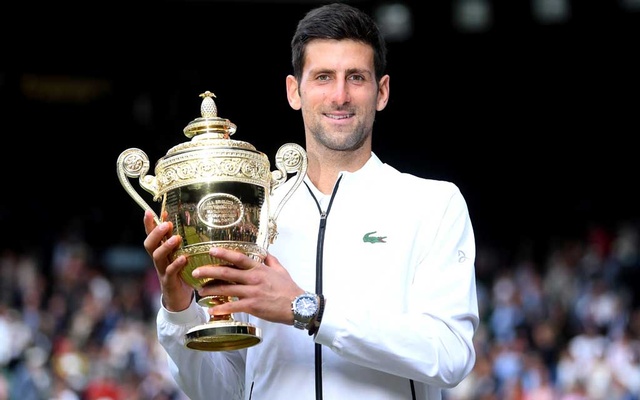
Djokovic beats Federer in Wimbledon epic to win fifth title

Novak Djokovic again proved the toughest of nuts for Roger Federer to crack as he repelled everything the Swiss threw at him to claim a fifth Wimbledon title in the first All England Club final to be decided by a tiebreaker on Sunday.

The defending champion was outshone at times on Centre Court and saved two match points deep into a gripping decider but he dredged his tank of mental and physical resilience to claim a thrilling 7-6(5) 1-6 7-6(4) 4-6 13-12(3) win.

Nothing could separate the players in an intoxicating final set and the match was already the longest Wimbledon singles final ever when the club’s new rule stipulating a tiebreak at 12-12 in a deciding set was deployed.

Both players looked out on their feet after nearly five hours of compelling combat but, as he had done in the day’s two other tiebreaks, Djokovic held his nerve to crush Federer’s dream of claiming a ninth title and becoming the oldest man to win a Grand Slam in the professional era.

The top-seeded Djokovic moved 6-3 ahead and, after the final point had to be replayed following a Hawkeye challenge, he was able to celebrate a 16th Grand Slam title when a weary Federer ballooned a forehand off the frame of his racket.

Victory took the 32-year-old Serbian level with Bjorn Borg in fourth place on the all-time list of men’s winners at Wimbledon and moved him four behind Federer on the all-time Grand Slam list.

“Roger is one of the greatest players of all time, who I respect a lot,” Djokovic, who has now beaten Federer in three of the last six Wimbledon finals, said on court.

“Unfortunately one player has to lose and we both had our chances. It’s unreal to be two match points down and come back.”

Federer held serve to stay alive seven times in the deciding set but broke the Djokovic serve at 7-7 and served for the title. At 40-15 a sensational victory was in the palm of his hand but Djokovic was not done.

A forehand mistake cost Federer his first match point and then he watched aghast as Djokovic whipped a forehand winner across him as he closed in on the net.

Eight service holds then sent the match into a tiebreaker at 12-12, a rule brought in after last year’s tournament.

Djokovic jumped ahead and, for once, Federer had run out of magic as he suffered one of his most heart-breaking defeats.

“It was a great match, it was long, it had everything. Novak, congratulations, man, that was crazy,” Federer said.

Facebook says some users facing outage on its platforms

Facebook Inc said on Wednesday it is working to resolve issues faced by some users while sending media files on its social media platforms including WhatsApp and Instagram.

More than 14,000 users reported issues with Instagram, while more than 7,500 and 1,600 users reported issues with Facebook and WhatsApp, according to outage tracking website Downdetector.com.

The website’s live outage map showed that the issues mainly cropped up in parts of Europe and the United States.

Facebook had experienced one of its longest outages in March, when some users around the globe faced trouble accessing Facebook, Instagram and WhatsApp for over 24 hours.

LRB to continue with Balam as Ayub Bachchu’s son wishes them well

The members of Love Runs Blind or LRB have decided to operate under the banner owned by Bangla rock legend Ayub Bachchu and with Kazi Md Ali Zahangir Balam in it.

After they had moved to perform as Balam and the Legacy, one of Bachchu’s heirs, his son Ahnaf Tazwar Ayub, launched a scathing attack on the people “who threatened his mother and sister for barring the other members from performing as LRB”.

Ahnaf, who is studying abroad now, wrote in a Facebook post on Monday: “My family and I only asked that the remaining members of LRB perform under a different band if they have to, so that dad’s entire life’s work could remain as it was.

“All we wanted was this, but that request was twisted into something else entirely. I’ve been seeing people give death threats towards my mother and sister. I’ve seen 1000 comments saying that my father isn’t my property, but he’s a national treasure.”

“That’s why I’m letting the remaining members of LRB (or Balam and the Legacy as they’re calling themselves now) know that they’re free to perform as LRB as they chose to initially. I wish them the very best and hope they achieve great success and keep Sollo’s music alive. I wish LRB all the success they can achieve,” Ahnaf added.

On Tuesday, an official at the Copyright Office told the popular band and its logo were registered by only Bachchu, the legendary vocalist and lead guitarist, following his application in 2010.

It means only his heirs can run the band now while the others will need their permission to perform as LRB after Bachchu died last year.

The band’s Manager and Sound Engineer Shamim Ahmed told bdnews24.com Balam and the Legacy was a new band, not a renamed version of LRB, with Balam as the vocalist and lead guitarist.

The remaining members of LRB will wait for a call from Bachchu’s family to perform as LRB, he added.   

After seeing Ahnaf’s post, Shamim told bdnews24.com on Wednesday that they think there is no need for using a new name now as Bachchu’s family lifted the objection to use LRB.

He said they would finalise the decision once their lead guitarist Abdullah Al Masud, who was out of Dhaka to take care of his ailing mother, returned.

Shamim also said they were not leaving Balam out.

“Balam Bhai came to help us. We want him to stay with us. Now we have a vocalist cum guitarist (Balam). We also have good understanding with him,” he said.    

Bachchu formed the band in the early 90s with bassist Saidul Hasan Swapan, Habib Anwar Joy on drums, and SI Tutul on keyboard.

With Joy and Tutul having left the band, Swapan is the only living founding member now.

Shamim, Masud, and drummer Golamur Rahman Romel have been with the band for over a decade.